Lhasa Tour 4 Nights 5 Days | Nepal Lion Tours
Explore the spiritual heart of Tibet on a 4-night, 5-day journey through Lhasa, discovering ancient monasteries, sacred temples, vibrant local culture, and breathtaking Himalayan landscapes.
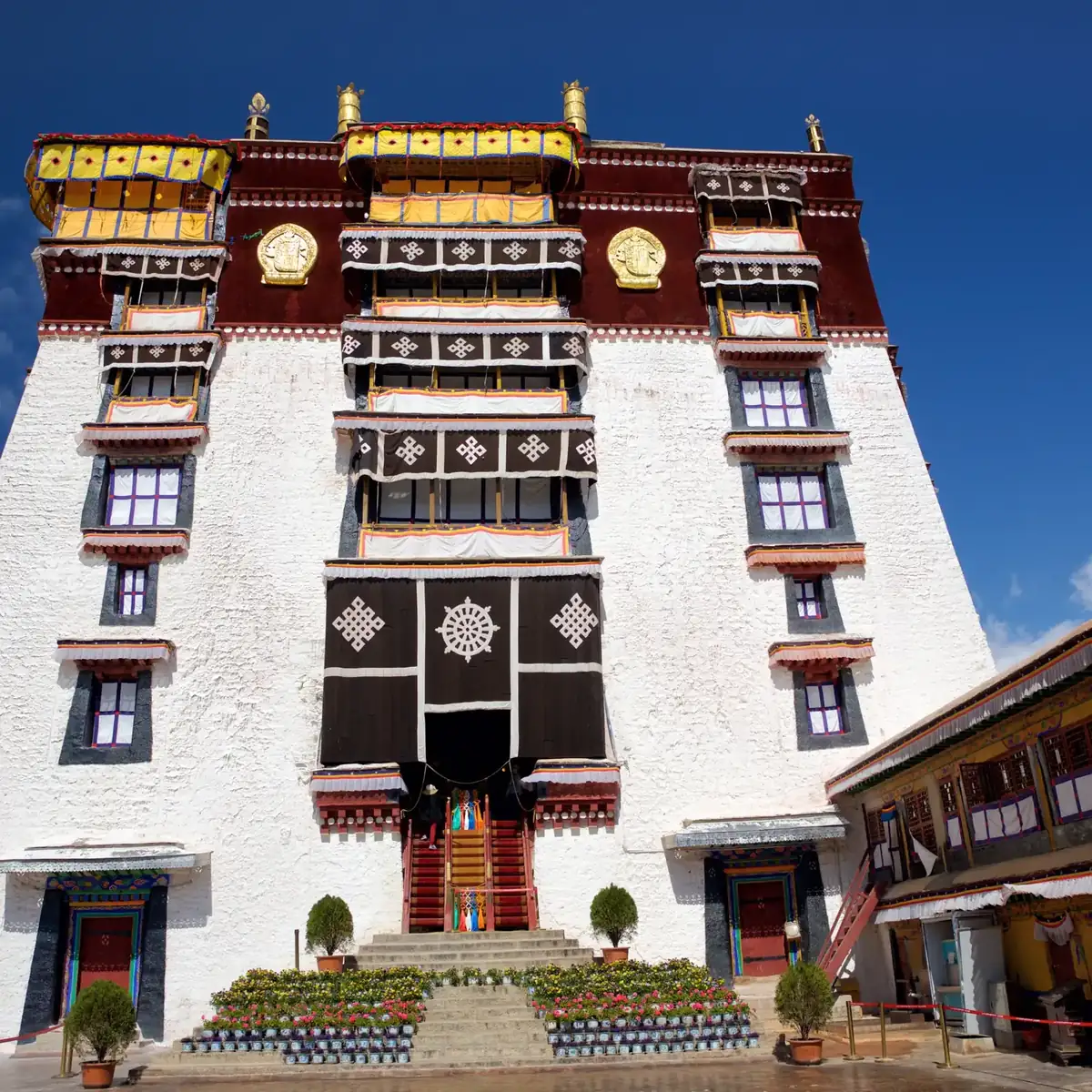
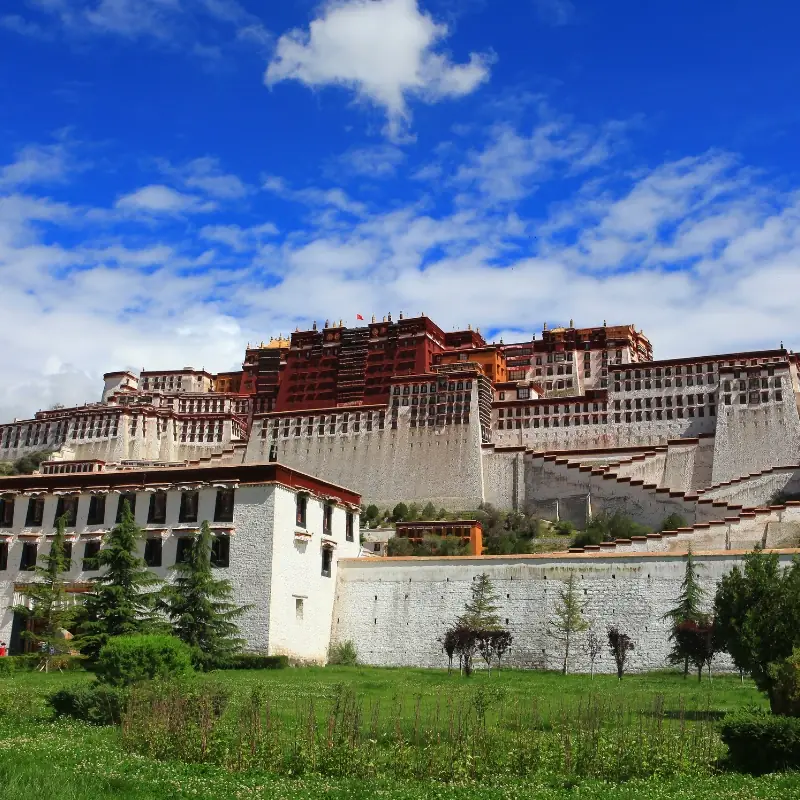
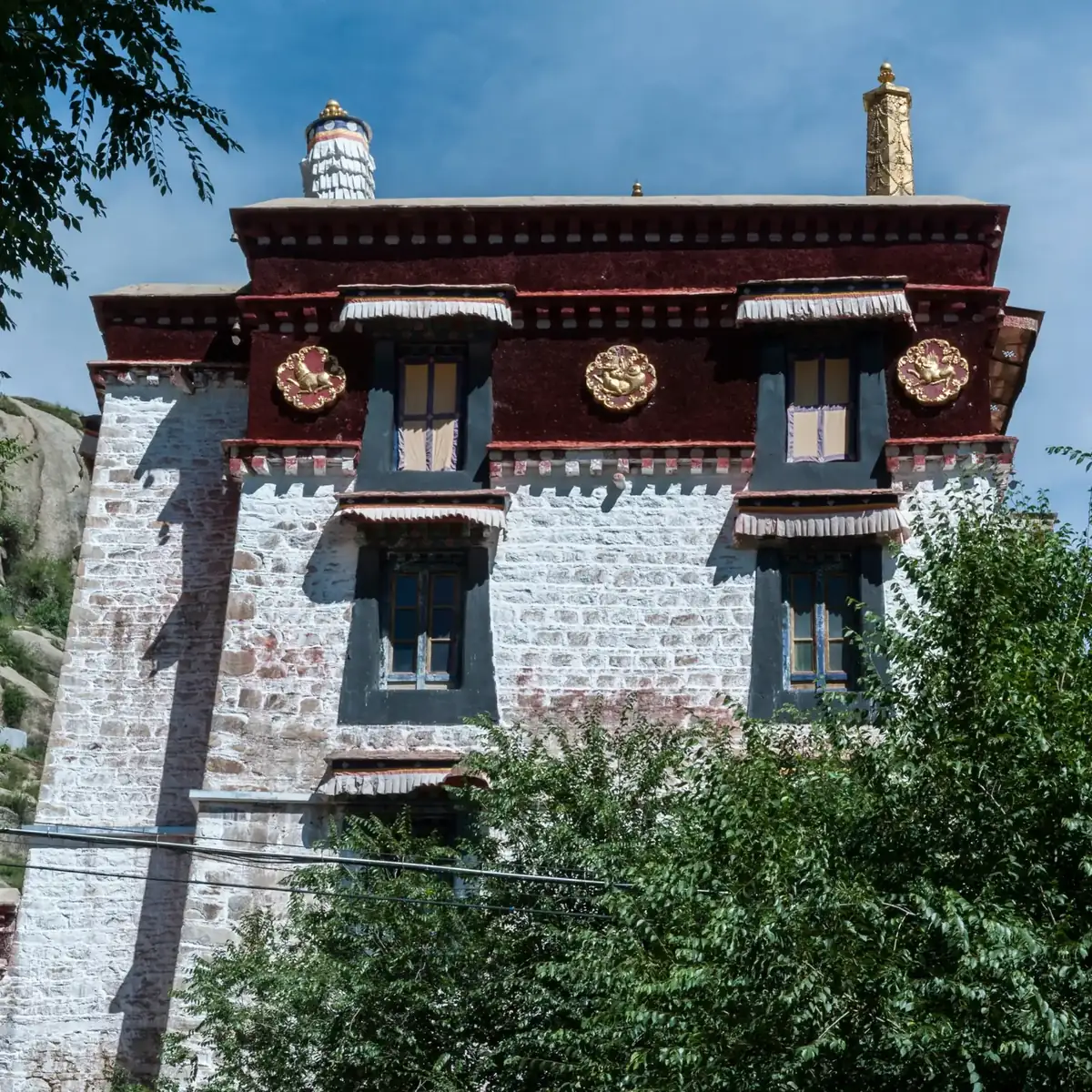
Tour Highlights
Five days of palace, monastery and market culture on the Tibetan Plateau, with a single base city at 3,650 m / 11,978 ft and no road-to-road hotel changes.
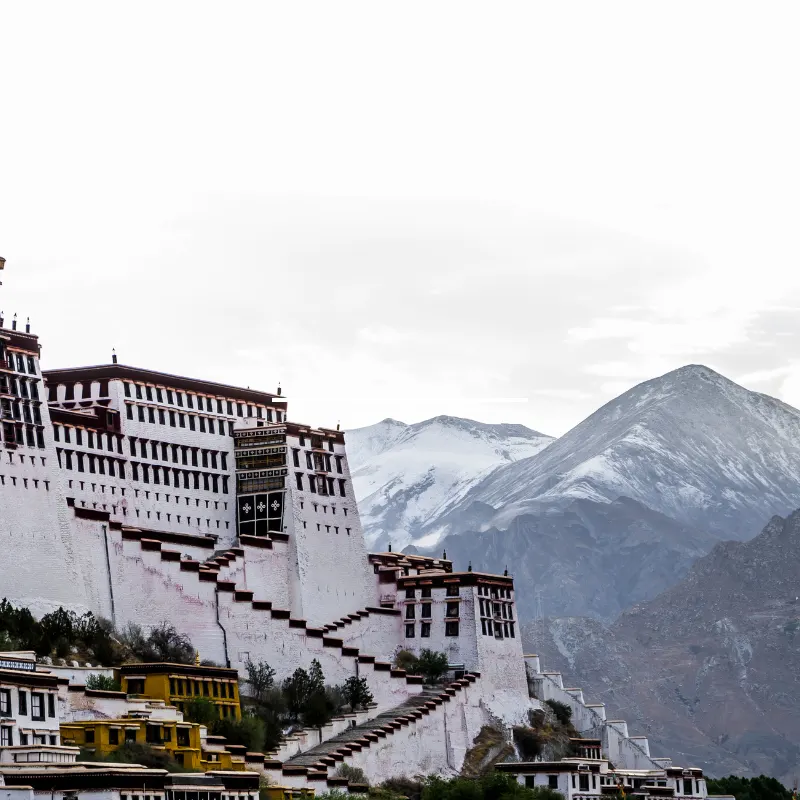
- Potala Palace — about 3,700 m / 12,139 ft: the 13-storey red-and-white citadel on Marpori (Red Hill), begun in 1649 by the 5th Dalai Lama and a UNESCO World Heritage Site since 1994.
- Jokhang Monastery — about 3,650 m / 11,978 ft: Tibet’s most sacred temple, founded in the 7th century and guarded by a life-size golden Shakyamuni Buddha statue, ringed by pilgrims circumnambulating continuously.
- Barkhor Market — about 3,650 m / 11,978 ft: the religious and social centre of Lhasa, where the kora path becomes a market for prayer flags, thangka frames, butter lamps and khatag scarves.
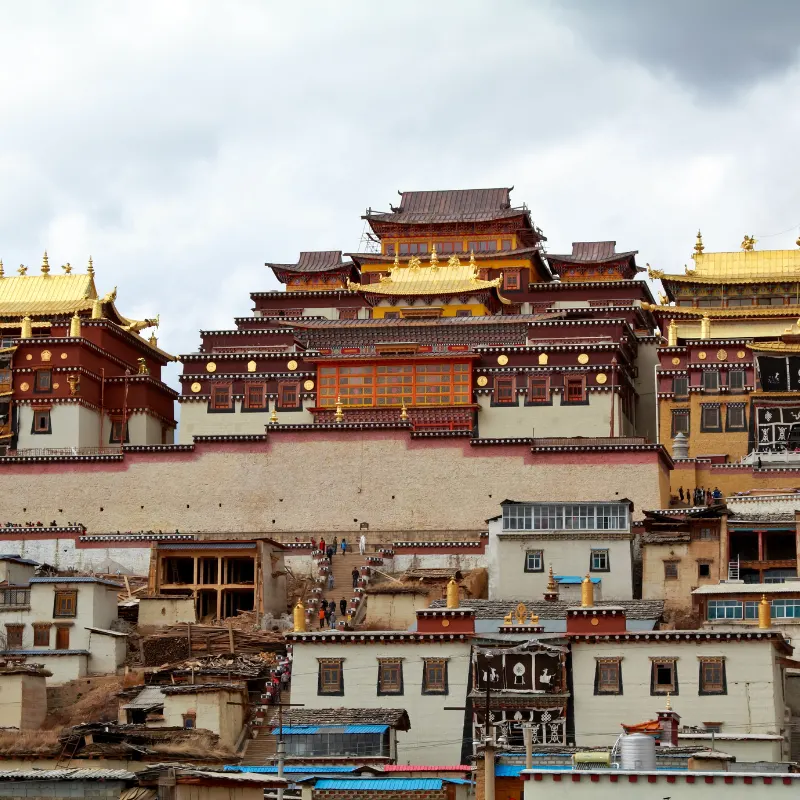
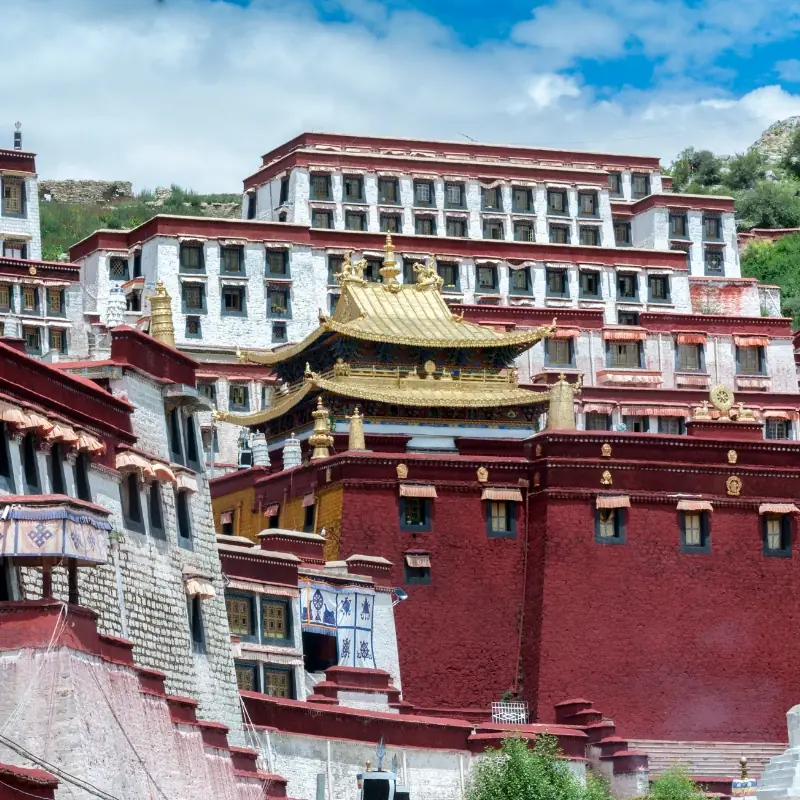
- Ganden Monastery — about 4,300 m / 14,108 ft: the senior of the “great three” Gelug monasteries, founded in 1409 by Tsongkhapa and perched on a ridge above Dagze County — the highest point of the tour.
- Sera Monastery — about 3,600 m / 11,811 ft: a short drive 5 km north of Lhasa, once home to more than 5,000 monks and set among some of the prettiest courtyards in the city.
- Norbulingka — about 3,650 m / 11,978 ft: the “Treasure Park” summer palace of the 7th Dalai Lama, begun in 1793 and covering roughly 360,000 square metres of garden.
- The Kora Route: the circumambulation paths around the Potala Palace, the Jokhang and Ganden — the single clearest way to understand how Lhasa’s residents actually use their city.
- Old Lhasa: the tight lanes behind the Jokhang, the four-quarter gates of the temple, the tea houses and the pilgrims who have walked here since the 7th century.
- Compact and Complete: 5 days, one base city, private vehicles throughout — the fullest first-visit circuit in the shortest practical window from Nepal.
Lhasa Tour 4 Nights 5 Days Overview
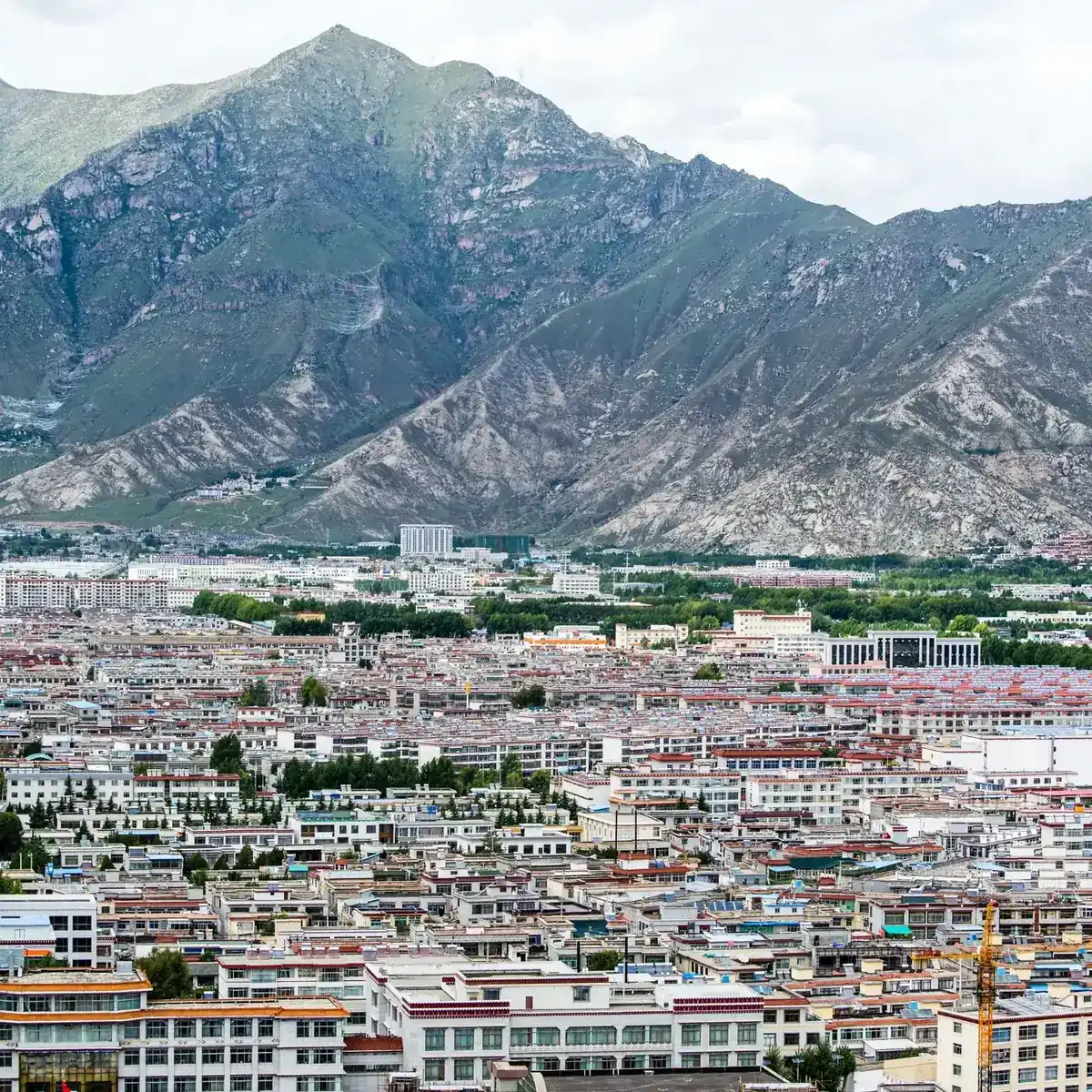
The Lhasa Tour 4 Nights 5 Days is a 5-day cultural tour of Lhasa, the capital of Tibet, flying out of Kathmandu on Day 01 and flying home on Day 05 with four nights in between. The city sits at 3,650 m / 11,978 ft on the north bank of the Kyichu River, which is the single fact that shapes this trip more than anything else — and the route is graded easy, because almost all of it is covered by road and level walking rather than trail.
A Lhasa tour is a short, altitude-aware cultural circuit through Tibet’s capital, built around the Potala Palace, the Jokhang Monastery in the heart of Old Lhasa, the Barkhor pilgrim market, and the great Gelug monasteries of Sera and Ganden. All four nights are in the same city, so nothing is unpacked and no luggage moves between hotels.
With Nepal Lion Tours, the package starts from USD 1,800 per person and includes the Tibet travel permit, an English-speaking Tibetan guide, hotel accommodation on a twin-sharing basis, daily breakfast, all sightseeing and monastery entrance fees, and hotel–airport–hotel transfers in both Lhasa and Kathmandu.
What Makes the Lhasa Tour 4 Nights 5 Days Special?
The headline is the Potala Palace — the vast red-and-white citadel on Marpori (Red Hill) that was the winter seat of the Dalai Lamas and the most symbolic building in Tibet. Construction began in 1649 under the 5th Dalai Lama and continued under the 7th, and the complex has been a UNESCO World Heritage Site since 1994. Standing at its upper terraces with the Lhasa valley below is the moment most travellers remember.
The itinerary is built in the right order, and that ordering is the real craft. Day 01 is deliberately near-empty: you land at 3,650 m, meet your guide, transfer roughly 60 km / 1 hour to the hotel, and rest. Only after that does the Potala Palace happen. Day 03 gives you the two most alive places in the city — Jokhang, where pilgrims circumambulate in a continuous flow, and Barkhor Market, where the same devotion is also a bazaar of prayer flags, thangka supplies, butter lamps and jewellery.
Day 04 is the outlier. Ganden Monastery, the senior of the “great three” Gelug monasteries, stands at about 4,300 m / 14,108 ft and is roughly 650 m higher than Lhasa itself. It is the only genuinely high-altitude moment on the tour, and it is the day that reminds you how thin the air is up here.
Why Choose the Lhasa Tour 4 Nights 5 Days?
Lhasa is not an easy destination to reach, and that is exactly what makes it worth the effort. Independent travel is not permitted in Tibet — every visitor travels on an organised permit arranged through a registered agency — so the practical barrier that stops most people is paperwork, not mountains. This package handles that paperwork and leaves you with a clean five-day circuit on the ground.
The route is also honest about effort. Every sightseeing day is done by private vehicle, distances inside the city are short, and the single climb is a paved approach to Ganden. There is no trekking, no camping, no daypack, and no night above 3,650 m / 11,978 ft. For anyone who wants to see the cultural heart of the Himalaya without committing to a two-week expedition, the Lhasa Tour 4 Nights 5 Days is the most complete short introduction available.
What’s Included and What Isn’t?
As published, the inclusions are transportation, the Tibet travel permit, an English-speaking Tibetan guide, accommodation on a twin-sharing room basis, sightseeing and monastery entrance fees as per the itinerary, daily breakfast, and hotel–airport–hotel transfers in Lhasa and Kathmandu. That is a longer inclusion list than most city tours manage, because the permit and the entrance fees are the two things independent visitors always get wrong.
The exclusions are equally clear: travel insurance, lunch and dinner, and personal expenses such as drinks and tips. Two things are also worth budgeting separately — your international flight, and the Chinese visa required in addition to the Tibet travel permit. Our team confirms exactly what the published price covers when you book.
Who Is This 5-Day Lhasa Tour For?
- First-time visitors to Tibet who want the essential sights in the right order without weeks of planning.
- Travellers with five to eight days available — the package plus the international travel either side.
- Couples and honeymooners looking for a destination that is both remote and rewarding, with four nights in one city and no packing.
- Families and older travellers — every transfer is by private vehicle and the walking is at street level, not on trail.
- Photographers and artists chasing the Potala Palace, the Ganden Monastery’s ochre cliff monastery, and the Pilgrim traffic of Barkhor.
- Buddhist pilgrims travelling to the Jokhang, the most sacred temple in Tibetan Buddhism.
- Travellers combining Nepal and Tibet — the flight departs from Kathmandu, so it slots neatly onto a Nepal trek or a Kathmandu city break.
No previous high-altitude experience is required. The one genuine caveat is the altitude itself: you sleep at 3,650 m / 11,978 ft from the first night, so if you have heart or respiratory conditions, speak to your doctor before booking and tell your guide on arrival.
Guide’s Note — Nepal Lion Tours From our experience putting guests on the Kathmandu–Lhasa flight, the Day 01 rest afternoon is the reason this trip works for people who would otherwise struggle. You land at midday, walk to the hotel, eat, sleep, and the body starts settling while you are still in bed. Guests who ignore the rest and push to Barkhor that afternoon usually feel it by evening; the ones who follow the guide’s advice almost never do. We also ask our Lhasa team to keep the first evening gentle — no sightseeing, no altitude walks, nothing to prove. — Nepal Lion Tours
Quick Facts
Lhasa Tour 4 Nights 5 Days at a Glance
| Tour Fact | Details |
|---|---|
| Tour Name | Lhasa Tour 4 Nights 5 Days |
| Duration | 5 days / 4 nights |
| Region | Lhasa, Tibet Autonomous Region, China |
| Maximum Altitude | About 4,300 m / 14,108 ft at Ganden Monastery; Lhasa city at 3,650 m / 11,978 ft |
| Difficulty | Easy; altitude is the only real consideration |
| Main Highlight | Potala Palace at about 3,700 m / 12,139 ft |
| Signature Stop | Jokhang Monastery and the Barkhor kora |
| Start / End | Kathmandu to Kathmandu, via direct flight |
| Route | Kathmandu – Lhasa – Potala – Norbulingka – Sera – Jokhang – Barkhor – Ganden – Lhasa |
| Typical Walking | 1–3 hours per day on level or paved ground |
| Best Season | March–November; September–October best overall |
| Price From | USD 1,800 per person |
| Accommodation | Hotel, twin-sharing basis |
| Meals | Daily breakfast included |
| Group Size | 1–10 passengers |
| Guide | English-speaking Tibetan guide |
Lhasa Tour Route and Elevation
The Lhasa Tour route is a single-city circuit, which is unusual for a Himalayan trip and is exactly why it works so well. You land once, sleep four nights in one hotel, and move between sights by private vehicle. The elevation story is equally simple: you arrive at 3,650 m / 11,978 ft and stay there, with one excursion upward to Ganden at about 4,300 m / 14,108 ft and nothing higher.
Lhasa Tour Route at a Glance
| Day | Tour Route | Altitude | Highlights |
|---|---|---|---|
| Day 01 | Kathmandu → fly → Lhasa | 3,650 m / 11,978 ft | About 1-hour flight, airport meet and greet, 60 km / 1 hr transfer, acclimatisation rest |
| Day 02 | Lhasa → Potala Palace → Norbulingka | About 3,700 m / 12,139 ft | The 13-storey palace, the kora route, the “Treasure Park” summer gardens |
| Day 03 | Lhasa → Sera → Jokhang → Barkhor | About 3,600 m / 11,811 ft | The great Gelug monastery, the sacred temple, the pilgrim market |
| Day 04 | Lhasa → Ganden Monastery → Lhasa | About 4,300 m / 14,108 ft | Tsongkhapa’s ridge monastery, the highest point of the tour, free afternoon |
| Day 05 | Lhasa → fly → Kathmandu | 3,650 m / 11,978 ft | Breakfast, airport transfer, return flight |
Lhasa Tour Elevation Profile
The profile is unusually flat by Himalayan standards. Kathmandu sits at 1,400 m / 4,593 ft and Lhasa at 3,650 m / 11,978 ft, so the interesting change happens in the air — you gain roughly 2,250 m / 7,385 ft in about an hour, which is why the Day 01 rest matters and why the city days that follow are the acclimatisation as well as the sightseeing.
Within Lhasa the range is narrow. The Potala Palace sits slightly above the city at about 3,700 m / 12,139 ft, Sera is level with or just below it at about 3,600 m / 11,811 ft, and Ganden Monastery is the single outlier at about 4,300 m / 14,108 ft — a climb of roughly 650 m / 2,133 ft above the city, reached by road and then a gentle paved approach. Ganden is where you will feel the altitude, and it is a morning excursion, not an overnight.
A travel map and elevation summary can be provided with your travel materials so you can follow the daily route, the city altitudes and the Ganden climb before you arrive.
How the Lhasa Tour Days Unfold
Day 01 — Fly Kathmandu to Lhasa, transfer and rest: you fly for about an hour over the Himalayan ranges to the capital of Tibet. Lhasa, which in Tibetan means “Place of the Gods” and sits at 3,650 m / 11,978 ft on the north bank of the Kyichu River, is the residence of the Dalai Lama. Your local representative meets you on arrival and transfers you to your hotel, a journey of about 60 km / 1 hour. The afternoon is deliberately free for rest and acclimatisation.
Day 02 — Potala Palace and Norbulingka: after breakfast you spend the day on Lhasa’s two most impressive secular and ceremonial sights. The Potala Palace, built on a single hill and synonymous with Tibet since the time of Songtsen Gompo, is the centrepiece. Norbulingka — meaning “Treasure Park” — covers roughly 360,000 square metres and is considered the largest man-made garden in Tibet, the summer residence of the 7th Dalai Lama. You return to the hotel for the night.
Day 03 — Sera Monastery, Jokhang Monastery and Barkhor Market: a full day in and around the old city. Sera Monastery, about 5 km north of Lhasa, is one of Lhasa’s prettiest monasteries and once housed a community of more than 5,000 monks. Jokhang Temple, in the heart of Old Lhasa, holds Tibet’s most precious religious relic — a golden Shakyamuni Buddha statue brought as a wedding gift by the Chinese Princess Wencheng to the Tibetan King Songtsen Gompo. Barkhor Market, the religious and social focus of the city, closes the day.
Day 04 — Ganden Monastery and a free afternoon: you drive to Ganden Monastery, or Ganden Namgyeling, one of the “great three” Gelug university monasteries of Tibet, in Dagze County. Founded in 1409 by Tsongkhapa, it is the highest and often the most atmospheric of the three. The afternoon is free for shopping. Overnight in Lhasa.
Day 05 — Fly back from Lhasa to Kathmandu: breakfast, transfer to the airport and your return flight to connect onward — the Potala Palace, three great monasteries and the Barkhor kora complete.
How to Get to the Lhasa Tour
Tibet is reached by air for this itinerary, and the route is conditional on paperwork rather than on weather. The tour departs from Kathmandu’s Tribhuvan International Airport (KTM) and uses the direct Kathmandu to Lhasa Gonggar Airport (LXA) sector, roughly 1 hour in the air over the Himalayan range.
Kathmandu to Lhasa: Flight or Road?
| Option | Approx. Travel Time | Best For |
|---|---|---|
| Direct flight Kathmandu (KTM) – Lhasa (LXA) | About 1 hour in the air, plus transfers | The standard and practical approach |
| Overland via the China–Nepal border crossing at Kodari (Nepal) / Zhangmu (China) | Around 2 days overland | Slow travellers already on the Nepal–China land route |
| Connection via a Chinese hub such as Chengdu, Guangzhou or Beijing | 8–20 hours plus | Visitors routing to Tibet from outside Asia |
*Flight schedules, routing and border-crossing availability change; our team confirms the current routing and permits at booking.
The direct flight is the normal choice, and the flight itself is part of the experience — you cross the Himalayan range at cruise height, cross into Tibet, and descend into the Lhasa valley. It also saves two to three days of road time, which on a five-day tour is the difference between a proper introduction and a bus window.
Overland travel through the Kodari–Zhangmu crossing is possible in principle and has been used by overland travellers, but crossing status at this border has changed repeatedly in recent years, and the overland option also demands a different permit arrangement. Treat the direct flight as the route for this package and let Nepal Lion Tours confirm what is currently workable.
Lhasa Gonggar Airport to Your Hotel
Lhasa Gonggar Airport lies at about 3,570 m / 11,713 ft, roughly 60 km from central Lhasa, and the transfer takes about 1 hour. Your Tibetan guide or local representative meets you inside the arrivals hall, assists with any luggage, and drives you directly to your hotel. From the airport the road crosses the Lhasa River and climbs gently into the valley, with the Potala Palace visible from a number of points along the way.
Because you arrive at altitude, this first transfer is deliberately unhurried. There is no sightseeing en route, and your guide will check how you feel on arrival before any decision about the evening.
Returning to Kathmandu After the Tour
On Day 05 you are transferred from your hotel to Lhasa Gonggar Airport with time to clear security and check in. The flight back to Kathmandu takes about an hour, arriving in the afternoon, which usually leaves you the evening to continue a Nepal itinerary — a Kathmandu city tour, a Nagarkot sunrise, or the start of a treks such as Everest Panorama or Poon Hill in the days that follow.
If you have an international connection the same day, we recommend building in a buffer. Weather, air-traffic control and handling at both ends can move a flight, and the return leg is a short one.
A Practical Tip for International Travellers
Carry your original passport, your Chinese visa and your Tibet travel permit as hand luggage — you will be asked for them at Kathmandu departure, at the Lhasa immigration desk, and again on the return flight. Keep at least two passport photocopies and a digital copy of every document in case a copy is needed while the original is with an authority.
Lhasa operates unofficially on UTC+6, roughly 15 minutes ahead of Nepal, while official Chinese time is set at UTC+8. Phone clocks follow official time, so it is worth setting yours mentally rather than assuming everything lines up with Kathmandu.
Guide’s Note — Nepal Lion Tours Our Lhasa team treats the Day 01 afternoon as sacred, and we ask guests to do the same. The instinct after a long travel morning is to go and see something, and we have had guests walk to the Jokhang at four in the afternoon on their first day and pay for it that night. Plan the first evening the way you would plan a rest day after a long-haul flight — light food, early sleep, and no heroics. Day 02 will feel better for it. — Nepal Lion Tours
Lhasa Tour Difficulty, Fitness & Altitude
The Lhasa Tour is graded easy, but easy does not mean effortless: the demands here are altitude and sun rather than fitness. Every sightseeing day is done by private vehicle, the walking is on level or paved ground, and no day exceeds about 3 hours of walking. What you do need is the ability to walk slowly uphill for an hour or so at 3,650 m / 11,978 ft, and patience with your own breathing.
Where the Effort Actually Is?
The first genuine effort is Day 01 itself — a short flight that adds roughly 2,250 m / 7,385 ft of altitude in about an hour, before you have walked a single step. Your pulse will be higher than expected that afternoon and your appetite may be unreliable. This is normal, it is manageable, and it is why the itinerary leaves the day open.
The second is Day 04 at Ganden. The drive takes you most of the way up, but there is a paved approach climb of a few hundred metres to the monastery gate, at the highest altitude of the tour. Guests who skip breakfast or walk up fast tend to feel it; guests who take it slowly usually do not.
The third is not fitness at all — it is the stairways inside the Potala Palace, which climb a 13-storey building without lifts, plus long cobbled stretches of the Barkhor kora where the natural pace is a slow circumambulation.
Guide’s Note — Nepal Lion Tours Guests often assume the hard part of a Tibet trip is the sightseeing, and it is not — it is the Ganden morning, because it is the one time we take you above the city. At about 4,300 m / 14,108 ft the walk from the car park to the monastery gate is short but unmistakably uphill in thin air. Our guides set a deliberately slow pace, stop twice without being asked, and will offer you tea at the top rather than rushing you into the courtyard. Our one request: eat breakfast before you leave Lhasa. It is the single biggest difference we have seen between guests who enjoy Ganden and guests who spend the morning sitting down. — Nepal Lion Tours
How to Prepare for the Lhasa Tour
- Walk regularly for the three to four weeks before departure — daily walks of 30–45 minutes build the leg strength the palace staircases need.
- Practise stair climbing. The Potala Palace is climbed on foot through many levels, and there’s nothing to hold onto on some sections.
- Build leg and cardiovascular fitness with two or three longer walks a week. You do not need trail fitness, only the ability to keep an easy pace uphill for an hour.
- Prepare for the altitude instead of training for the marathon. Stay hydrated from the moment you land, eat before you feel hungry, and avoid alcohol on Day 01.
- Do not overtrain in the week before departure. Fatigue on arrival at altitude is more common than fitness deficits.
- Protect your sleep before you fly. Jet lag and altitude fatigue compound each other, and most of our guests do better with a normal sleep routine in the two days before the flight.
How Does the Lhasa Tour Compare with Longer Himalayan Treks?
Set beside a classic Nepal itinerary, the Lhasa Tour is much easier. There is no continuous multi-day walking, no camping, no porter load, and no trail exposure. A comparable Nepal package might involve six to eight hours of walking a day for a week at altitudes climbing to 5,000 m / 16,400 ft or beyond; the Lhasa tour peaks at about 4,300 m / 14,108 ft for half a day.
The caveat is that altitude cannot be trained for, and it arrives immediately rather than gradually. On a trekking route you acclimatise over days; here you land at 3,650 m / 11,978 ft in an hour. For a fit person that is a non-event. For anyone with cardiac, respiratory or blood-pressure conditions, it deserves a conversation with a doctor first.
Altitude, Acclimatization & Safety
Lhasa at 3,650 m / 11,978 ft sits high enough for mild altitude effects — roughly comparable to a Colorado ski town, but arriving with no acclimatisation at all. Most guests feel a shortness of breath on the first evening and find it settles within 24–48 hours. Ganden at about 4,300 m / 14,108 ft is the highest point and should be treated as a half-day excursion.
Lhasa Tour Altitude Profile
- Kathmandu — 1,400 m / 4,593 ft: departure point; the low point of the trip.
- Lhasa Gonggar Airport — about 3,570 m / 11,713 ft: arrival airport, 60 km from the city.
- Lhasa city — 3,650 m / 11,978 ft: all four nights; the de facto maximum overnight altitude.
- Potala Palace — about 3,700 m / 12,139 ft: the highest built structure you visit, on Marpori (Red Hill).
- Norbulingka — about 3,650 m / 11,978 ft: the “Treasure Park” gardens in the eastern valley.
- Sera Monastery — about 3,600 m / 11,811 ft: roughly 5 km north of the city centre.
- Jokhang Monastery and Barkhor — about 3,650 m / 11,978 ft: Old Lhasa, at street level.
- Ganden Monastery — about 4,300 m / 14,108 ft: the highest point of the tour, in Dagze County, reached on Day 04.
How the Body Adapts to Altitude
Adaptation is mostly a matter of breathing more deeply and letting your red-blood-cell count catch up over the following days. Practically, that means keeping water intake high, eating small amounts more often than usual rather than large meals, keeping alcohol to a minimum, and taking stairs slowly for the first 24 hours.
Most importantly, do not treat the arrival-day rest as optional. Sleep is when the body does a disproportionate share of the acclimatisation work, and our guides on the ground will tell you plainly if they think you are pushing too fast.
Symptoms of Altitude Sickness to Watch For
Mild symptoms, common and usually manageable:
- Headache, particularly in the evening or after alcohol
- Shortness of breath on stairs or on the flat after a short walk
- Fatigue that feels disproportionate to the activity
- Reduced appetite or mild nausea
- Disturbed sleep, including headaches that wake you
More concerning symptoms, which mean you should stop and seek medical advice immediately:
- Persistent or worsening headache not relieved by rest and fluids
- Vomiting that does not settle
- Unusual breathlessness at rest, or a gurgling in the chest
- Confusion, slurred speech or unusual fatigue in you or a companion
- Inability to walk in a straight line, or loss of balance
If any of the second group appear, the correct response is to stop ascending, get down to a lower altitude if that is possible, and seek medical help. In Lhasa, medical care for travellers is available in the city, and your guide will help you access it — but descent is always the first and best treatment.
How Nepal Lion Tours Supports Altitude Safety
- An acclimatisation-first itinerary, with a genuinely free arrival afternoon and no major sightseeing before the body has had a full night.
- An English-speaking Tibetan guide with the group every day, watching for the signs above and speaking the local language if medical help is needed.
- Guide-led pacing on Day 04, so the Ganden approach is taken at a walking-pace climb rather than a rush.
- No night above Lhasa city level — the highest overnight on the tour is 3,650 m / 11,978 ft, which is well within normal touring range.
- A clear health and insurance position. Travel insurance is strongly recommended and must cover high-altitude travel, medical treatment and evacuation appropriate to Tibet at around 4,300 m / 14,108 ft. Check your insurer’s altitude limit and medical-evacuation wording explicitly, because a standard policy that covers Nepal trekking often does not automatically cover travel inside China.
Best Time for the Lhasa Tour
The published season for the Lhasa Tour runs March to November, with September and October the best overall window and April to June highly recommended. The plateau is high-altitude desert — dry, sunlit and often colder than the same latitude at sea level suggests — so the temperature swings matter more than the rainfall does.
| Season | Months | Weather & Conditions | Views | Overall |
|---|---|---|---|---|
| Spring | Mar–May | Dry and clear, mild days, cold nights | Excellent, clean plateau air | Highly recommended |
| Summer | Jun–Aug | Warm days around 20°C, July–August rain | Mixed — cloud often builds in Jul–Aug | Suitable, bring a rain layer |
| Autumn | Sep–Oct | Cool, dry, most stable weather of the year | Excellent | Best overall |
| Late autumn | Nov | Cold and dry, clear skies, shorter days | Very good | Good, wrap warmly |
| Winter | Dec–Feb | Very cold, night temperatures commonly below -10°C | Clear and bright | Outside the published season |
Spring — March to May
Spring is dry, bright and reliably clear, and the days are long enough for a full sightseeing schedule. This is also the season of Losar, the Tibetan New Year, and of the Shoton or Yogurt Festival that follows in summer, when the Potala Palace and the Barkhor kora fill with pilgrims. If you can align your dates with a festival, this is the most culturally charged time to be in Lhasa. Mornings and evenings remain genuinely cold, so layers are essential even in April.
Summer — June to August
Summer is the warmest part of the year, with daytime temperatures typically in the low twenties Celsius and the valley in full green. It is also the monsoon period for Tibet, and July and August bring afternoon and evening rain fairly regularly, plus cloud over the surrounding peaks. Many guests still choose it for the warmth and the long evenings; just carry a rain shell and expect the weather to change by the afternoon.
Autumn — September to November
Autumn is generally the best choice, and September and October the sweet spot. The air is dry and the sky is the clearest of the year, which matters enormously when the whole point of the trip is architecture against a mountain backdrop. The Potala Palace photographs best in this light, and the kora at Barkhor is busy but comfortable. Nights get properly cold, but the days are usually bright and manageable.
Winter — December to February
Winter is genuinely cold: night temperatures in Lhasa commonly fall below -10°C, and the palace terraces can feel severe in the wind. In exchange you get clear blue skies, thin air and a very different, more austere Lhasa, along with fewer visitors. The reason winter sits outside the March to November published season is the cold rather than the snow — snow at Lhasa’s altitude is a modest event, whereas the temperature is not.
Guide’s Note — Nepal Lion Tours The seasonal pattern here is the reverse of what most travellers expect, and it surprises people who book instinctively. On the plateau, the rain arrives in the summer months and the sky is at its clearest at the end of it. In our experience, guests who take late September to mid-October see the Potala Palace and Ganden in the best light of the year, and guests who take February–March find the city cold and empty but astonishingly clear. Whichever window you choose, send us your dates before booking flights — the Kathmandu–Lhasa sector is a small one, and the good slots go early. — Nepal Lion Tours
Which Season Should You Choose?
Choose September or October if you want the best views and the most reliable weather, and if photography matters to you. Choose April to June if you prefer warmer days, longer afternoons and the possibility of overlapping a festival. Choose July and August only if you want warmth and can accept rain and cloud, and carry a proper rain layer.
Whatever you pick, build a buffer day before your international departure. Flights into and out of Lhasa are weather-sensitive in both seasons, and the return to Kathmandu should not be booked tight against a long-haul connection.
Lhasa Tour Permits & Regulations
The route enters the Tibet Autonomous Region of China, so the trip requires the Tibet travel permit in addition to a Chinese visa — and both are arranged through a registered travel agency rather than independently. Nepal Lion Tours handles the Tibet travel permit as part of the pre-departure preparation included in this package.
Lhasa Tour Permits at a Glance
| Requirement | Who Needs It? | Who Arranges It? |
|---|---|---|
| Tibet travel permit (Tibet Entry Permit) | All visitors travelling to Lhasa, including transit visitors | Nepal Lion Tours |
| Chinese visa for the People’s Republic of China | All foreign passport holders entering China, including en route to Tibet | Guest, with documentation support from Nepal Lion Tours |
| Nepal visa | Visitors routing through Kathmandu | Guest — Nepal Lion Tours supplies the invitation letter |
| Endorsement for certain passports | Holders of Indian, Bangladeshi, Pakistani, Afghan and some other passports | Nepal Lion Tours — confirm eligibility at enquiry |
The Tibet Travel Permit
The Tibet travel permit — often called the Tibet Entry Permit — is the document that makes the trip legal, and it is not something you can obtain yourself. It must be applied for through a registered travel agency using your passport, your Chinese visa, and a set of pre-arranged bookings that the permit is attached to. Independent travel in Tibet is not permitted, which is why this permit and the agency behind it are inseparable.
The permit is not valid on its own: it is issued as an endorsement to an existing Chinese visa, and you are asked to carry both on the flight from Kathmandu and on arrival in Lhasa. It also sets the itinerary it was issued against, so any change to your planned route has to be confirmed with the agency before departure. The fee is set by the authorities and is subject to change — it is included in the package price, and our team confirms the exact rate and lead time for your dates when you book.
The Chinese Visa Requirement
A valid Chinese visa is a prerequisite for the Tibet travel permit, not an optional extra. If you already hold one, the process is straightforward. If you do not, it needs to be obtained in advance, and it is the item most likely to determine how early you should start planning. Allow several weeks rather than days, and note that a Nepal visa alone will not get you into Tibet.
Nepal Lion Tours supports the documentation stage — we provide the agency credentials and booking records the application needs, and we confirm your eligibility before you commit to a non-refundable flight.
Do You Need a Restricted-Area Permit?
No separate restricted-area permit is required for this route. The Tibet travel permit itself is the permission that governs travel in the region, including Lhasa. What applies instead is the organised-tour requirement: your movements in the region are tied to the agency’s arrangements rather than to an independent permit system.
The rule that catches visitors out is not a permit but a passport eligibility rule. Holders of certain passports — including those of India, Bangladesh, Pakistan and Afghanistan — cannot obtain the Tibet travel permit, or need additional endorsement, and this is assessed at the enquiry stage rather than at the airport. Tell us your passport nationality when you first message us and we will confirm the position immediately.
Who Arranges the Permits?
Nepal Lion Tours arranges the Tibet travel permit as standard pre-departure preparation, included in the published price. It is a documented, licensed process handled through our registered partners, and we will not confirm your booking until we know your application can succeed.
Carry your original passport, your Chinese visa and your Tibet travel permit at all times inside Tibet. Fees and regulations are set by the authorities and can change without notice, so we confirm the current position for your travel dates at the time of booking rather than quoting a figure that may no longer hold.
Food & Accommodation on the Lhasa Tour
Accommodation on the Lhasa Tour is a hotel rather than a moving series of guesthouses — you check in once and stay four nights. Most travellers are booked in a 3-star to 4-star hotel in central Lhasa, close enough to Barkhor to walk back after an evening out, though the exact property depends on availability and on how far ahead the booking is made.
Hotel Accommodation on the Lhasa Tour
Rooms are on a twin-sharing basis, with the best available room at the property selected for your group. Lhasa hotels in this band generally offer:
- Private bathrooms as standard, with en-suite or adjoining options
- Hot water and heating, which matters more than it sounds at 3,650 m / 11,978 ft — some older buildings run heating only for part of the day
- Electricity and charging points, generally reliable in city hotels, though a power bank is still worth carrying
- Wi-Fi in the lobby and often in rooms, though speeds vary and mobile data is the more dependable backup
- On-site or nearby restaurants, with Tibet’s chicken noodle soup (tukpa) and butter tea (po cha) within a few minutes’ walk
Lhasa’s high-altitude hotels are built for the climate, so rooms are cold in winter and cool in summer. That is normal, and it is why Nepal Lion Tours includes a down jacket in the package.
What Food Is Available in Lhasa?
Lhasa restaurants cover everything from Tibetan noodle soup to Tibetan-Chinese restaurants to international menus, and your guide will know where the good kitchens are near your hotel. Expect:
- Tibetan noodles (thukpa) — a warming soup noodle dish, the most reliable single meal in the city
- Tibetan momos — steamed or fried dumplings, vegetable or meat
- Tsampa and butter tea — roasted barley flour with po cha, the traditional Tibetan drink, salty and acquired taste
- Churu (sausages) and dried yak meat, the staples of Tibetan cuisine
- Chowmein and Chinese-style noodles, widely available and a safe bet
- Steamed momos, thukpa sekpa and Tibetan-style breakfast
- Standard Chinese and Tibetan-Chinese dishes, including dumplings, noodle soups and rice dishes
- Vegetarian dishes are readily available in all restaurants, which is normal rather than a special request.
Lunch and dinner are not included in the published price and are paid for by the guest. Your guide will point you at the best options near your hotel and near each day’s sights, and the cost of a good restaurant meal in Lhasa is modest by comparison with Nepal.
What Food and Accommodation Are Included?
| Included in the Lhasa Tour Package | Usually Paid Separately |
|---|---|
| Hotel accommodation, 4 nights, twin-sharing basis | Lunch and dinner |
| Daily breakfast | Chinese visa and Nepal visa fees |
| Tibet travel permit | Travel insurance |
| English-speaking Tibetan guide | Personal expenses, drinks and tips |
| All sightseeing and monastery entrance fees | Cash purchases at Barkhor market, khatags, monastery donations |
| Private transportation throughout Lhasa | International flights to and from Kathmandu |
| Hotel–airport–hotel transfers in Lhasa and Kathmandu | Single-room supplements, if requested |
Confirm the final inclusions list for your specific dates at booking, since hotel category and guide arrangements can be adjusted to your requirement.
Drinking Water in Lhasa
Use bottled or purified water for drinking and for brushing your teeth wherever you can, and do not assume tap water is safe even in a full-service hotel. Lhasa’s municipal water is treated but standards and plumbing vary by building, and the high altitude changes how dehydrated you feel without you noticing.
Ask your hotel to fill reusable bottles with boiled or purified water each morning — most do this without charge — and carry a reusable bottle rather than buying single-use plastic all week. Drink steadily through the day, especially on Day 01 and on Day 04 at Ganden.
Staying Comfortable in Lhasa Hotels
A few simple preparations make a four-night stay at 3,650 m / 11,978 ft comfortable:
- Bring a reusable water bottle and ask the hotel to fill it with purified or boiled water each morning.
- Keep a mid-layer in your daypack. Lhasa is cool in the morning, warm at midday and cold again after sunset, often within the same day.
- Carry a power bank. Charging points exist but rooms often have only one socket, and it may be needed for the night.
- Keep small notes in cash for the Barkhor market, entry tickets and small tea houses, where card machines are unreliable.
- Dress modestly for the monasteries. Shoulders and knees covered is the expectation at the Potala, Jokhang, Sera and Ganden, and it is a matter of respect as much of regulation.
- Tell your guide about any dietary need in advance. Vegetarian and alcohol-free eating is easy in Lhasa, but severe allergies and vegan requests should be flagged before arrival.
Why Book with Nepal Lion Tours?
Reaching Lhasa is mostly a paperwork problem, and that is precisely the part most visitors underestimate. A great Lhasa tour is about more than seeing the Potala Palace — it is about whether the permit was filed correctly, whether your Chinese visa is valid for the dates, whether the flights align with your international connection, and whether someone answers the phone in Kathmandu when the sector is delayed. With Nepal Lion Tours, this package is built around those practicalities.
- A registered company you can actually verify
- Nepal Lion Tours is a registered Nepali company based in Thamel, Kathmandu, and our Reg. No. 184920/074/075 can be checked before you book. We are members of the Nepal Tourism Board and the Trekking Agencies’ Association of Nepal (TAAN), and company documents are available on request. When a trip depends on permits issued through a registered agency, that paperwork is worth having.
- Local, licensed English-speaking guides on the ground in Lhasa
- Every departure is accompanied by an English-speaking Tibetan guide who is with you across all five days — not just for the transfers. They handle the monastery tickets, read the local health situation accurately, and know which kora route, which tea house and which museum hour actually works. Our guides and group leaders also complete a wilderness first-aid medical course.
- Private departures from two travellers
- The Lhasa Tour can be arranged from just two people, which suits couples, friends and families who prefer their own dates and a private vehicle. Groups are capped at 10 passengers, so the tour never becomes a coach tour. Private departures mean the pace is yours: more time at the Jokhang, an extra hour on the Barkhor kora, a shopping afternoon in Old Lhasa.
- An itinerary built around the acclimatisation, not just the highlights
- The Day 01 arrival afternoon is deliberately open, and the sightseeing starts on Day 02. The Ganden Monastery excursion — the highest point at about 4,300 m / 14,108 ft — is placed on Day 04 rather than Day 02, once your body has had three nights. That single ordering decision is the difference between a memorable trip and a headache.
- Permits, transfers and hotel arrangements handled in one place
- The Tibet travel permit is arranged as part of pre-departure preparation and is included in the price. So are hotel–airport–hotel transfers in both Lhasa and Kathmandu, all monastery entrance fees, and private transportation throughout the city — so you are not queueing for tickets or arranging taxis in a language you do not speak.
- Premium comfort and a pace set by you
- From USD 1,800 per person, the package includes a down jacket, duffel bag and a travel map, so the bulky cold-weather items can stay home. We select the best available room at each property, keep group size to a maximum of 10, and let you set the daily pace rather than following a fixed coach schedule. The final price can vary depending on group size, dates, services and any requested itinerary changes.
- A local team you can contact before and during your trip
- From your first enquiry through the Tibet permit stage to the landing at Lhasa Gonggar Airport, you have one point of contact in Kathmandu. If a flight moves or a document needs attention, there is a team in Nepal who can act on it — which is a genuine advantage on a route with one airline corridor and limited alternatives.
Book the Lhasa Tour 4 Nights 5 Days
Lhasa is one of the great destinations of the Himalaya, and one of the few that you cannot reach on your own. The 5-day Lhasa Tour gives you the Potala Palace, the Jokhang, Barkhor, Sera and Ganden — the essential Tibet introduction — in a single base city, with the Tibet travel permit and an English-speaking guide already arranged.
Tour at a Glance
- Duration: 5 days / 4 nights
- Price: From USD 1,800 per person
- Difficulty: Easy; altitude is the consideration, not fitness
- Maximum Altitude: About 4,300 m / 14,108 ft at Ganden Monastery; Lhasa city at 3,650 m / 11,978 ft
- Accommodation: Hotel, twin-sharing basis, 4 nights in one property
- Meals: Daily breakfast included; lunch and dinner paid separately
- Permits & Registration: Tibet travel permit included and arranged by Nepal Lion Tours; Chinese visa and Nepal visa are the guest’s
- Transportation: Direct Kathmandu–Lhasa return flight plus private vehicles and hotel–airport–hotel transfers in both cities
- Guide: English-speaking Tibetan guide throughout
- Group Size: 1–10 passengers; private departures from two travellers
- Cancellation: Free cancellation up to 14 days before departure, subject to the booking terms
Ready to Start Your Tibet Adventure?
Secure your Lhasa Tour dates with Nepal Lion Tours today. Send us your preferred travel date, group size and passport nationality through the booking form or WhatsApp at +977-9851039020, and our team will confirm permit eligibility, flight routing, hotel availability and the final itinerary in writing before you commit.
The passport nationality matters here more than it does for a Nepal trek, so please include it in your first message — it determines whether the Tibet travel permit can be issued at all. Whether you’re travelling solo, as a couple, with friends, or with family, we’ll help you prepare for a smooth and enjoyable journey into the capital of Tibet.
Lhasa is the easiest big destination in the Himalaya and the hardest to reach — five days that repay the paperwork. Choose your dates and start planning your Tibet tour today.
Related Tibet Tours
If you enjoyed the Lhasa Tour 4 Nights 5 Days, these related journeys either extend the same route, shorten it, or pair it with a completely different Himalayan kingdom two valleys away.
| Tour | Duration | Difficulty | Max Altitude | Best For |
|---|---|---|---|---|
| Lhasa Tour 4 Nights 5 Days | 5 days / 4 nights | Easy | About 4,300 m / 14,108 ft (Ganden) | The essential Potala, Jokhang, Sera and Ganden introduction |
| Lhasa Tour 6 Nights 7 Days | 7 days / 6 nights | Easy | Confirm at booking | A slower version with additional time in Lhasa |
| Tibet Tour 5 Nights 6 Days | 6 days / 5 nights | Easy | Confirm at booking | A longer Tibet circuit beyond the Lhasa valley |
| Tibet Tour 3 Nights 4 Days | 4 days / 3 nights | Easy | Confirm at booking | A shorter first look at the capital |
| Bhutan Tour 3 Nights 4 Days | 4 days / 3 nights | Easy | About 3,120 m / 10,236 ft (Taktsang) | A Himalayan kingdom with dzongs and Tiger’s Nest |
If you have more time, the Lhasa Tour 6 Nights 7 Days is the natural upgrade — the same core circuit with room for extra cultural days, a restorative day, or a longer exploration of the Lhasa valley. If time is short, the Tibet Tour 3 Nights 4 Days keeps the core sights and drops the outermost excursion.
Because you fly from Kathmandu, these packages combine easily with a Nepal itinerary. Most guests add a Kathmandu City Day Tour or a Nagarkot sunrise tour before the flight, or a Chitwan Jungle Safari Tour and short Annapurna or Everest-region trek afterwards. Our team will sequence the days so the Tibet leg is not squeezed against an international departure.
Trip Essentials
Packing advice, required equipment & gear recommendations
Essential
Lhasa Tour Packing List
Packing for the Lhasa Tour 4 Nights 5 Days is straightforward because you are based in a hotel rather than camping or moving between lodges. The key is layers and sun protection: Lhasa at 3,650 m / 11,978 ft can be cold at dawn and warm by midday, and the UV at that altitude is strong enough to burn in under an hour.
Nepal Lion Tours provides a down jacket, a duffel bag and a travel map with this package. A sleeping bag is available on request, though most travellers do not need one between March and November.
Hiking Gear
- Good walking shoes with grip — you are on cobbles, stone steps and paved approaches rather than trails
- Daypack or small backpack for the Potala Palace climb and for day excursions to Ganden
- Sun hat and sunglasses with a UV filter — not optional at 3,650 m
- High-SPF sunscreen and lip balm with SPF, reapplied through the day
- Lightweight umbrella or a compact rain shell for the July–August monsoon window
- Camera with a spare battery; cold drains batteries faster
- Small torch or headlamp for the early-morning kora if you are an early riser
Clothing: Use Layers Rather Than Bulk
Base layers
- Two merino or synthetic long-sleeve tops
- Thermal leggings or long johns for October–March
- Two pairs of underwear and two pairs of socks per week
Mid-layers
- A fleece or synthetic insulated mid-layer
- A light wool or synthetic jumper for evenings
Outer layers
- The down jacket provided by Nepal Lion Tours — this is the item that earns its place at Ganden and on the Potala terraces at dawn
- A waterproof shell jacket for rain and wind
Modest clothing for the monasteries
- A long-sleeve shirt and full-length trousers or a long skirt for visiting the Potala Palace, Jokhang, Sera and Ganden
- A lightweight shawl or sarong — useful at the Jokhang for kora and as an extra layer
- A scarf that works for warmth, sun and as cover at the temples
Footwear and day gear
- Broken-in walking shoes — do not bring new boots for this trip
- A spare pair of comfortable shoes for the palace staircases
- A daypack sized for a jacket, water layer and camera
Use a layering system rather than one heavy coat. It is easier to carry, easier to adjust across a 15-degree temperature swing in a single day, and far more practical at this altitude.
Sleeping and Evening Comfort
- A sleep mask — Lhasa hotels often have curtains, but not always good ones, and the evening is bright at altitude.
- Earplugs. Thin palace walls, early prayer calls and street noise are common in central Lhasa.
- Lip balm and a small hand cream — the air at 3,650 m is dry.
- A travel-size humidifier bottle if you are sensitive to dry air or prone to a dry cough.
- Your own pillowcase or a light neck pillow for the return flight if you find airline pillows uncomfortable.
Toiletries and Personal Health Items
- Sunscreen SPF 30 or higher, plus a stick version for reapplication
- SPF lip balm
- Hand sanitiser and a small pack of tissues — carry a few tissues with you on the kora
- Any personal medication, plus a basic remedy for headache, stomach upset and altitude discomfort
- Motion-sickness tablets if you are prone on flights or winding roads
- Rehydration salts or electrolyte sachets — genuinely useful on Day 01 and Day 04
- Plasters and antiseptic wipes for walking days
- A small pack of wet wipes — public facilities at high altitude and on pilgrim routes can be basic
- Insect repellent — mild, and mostly relevant for the evening walks around Old Lhasa in July–September
- Contact lens solution and a spare pair of glasses if you wear them
- A menstrual care supply if relevant; available in Lhasa pharmacies
- Any prescriptions in original packaging, with a copy of the prescription or a doctor’s letter
Electronics
- A phone or camera with a spare battery or a power bank
- A universal travel adaptor — China uses Type A, Type C and Type I plugs
- A universal adaptor with USB ports to avoid occupying the room’s only socket
- A short USB cable for charging in the car, which is the reliable charging window of the day
Download offline maps and translations before departure. Lhasa’s network coverage is good in the city but can be unreliable around Ganden, and Chinese app stores do not always carry English apps.
Documents and Money
- Original passport — required at Kathmandu departure, at Lhasa immigration, and on the return flight
- Your Chinese visa and your Tibet travel permit, carried with the passport at all times
- Two passport photocopies and a digital copy of the passport, visa and permit stored offline on your phone
- Your Nepal visa or the supporting documentation for it, as arranged with Nepal Lion Tours
- Travel insurance documents, including the emergency assistance number, saved offline
- Chinese yuan (CNY / RMB) in cash, mainly for Barkhor market, entry tickets, tea houses and small tips
- A small emergency fund in cash — card acceptance is good in larger hotels but unreliable in markets and small establishments
- A small day bag for documents, money and a water bottle, carried on sightseeing days rather than left in the room
How Much Should You Pack?
Lighter is better, particularly because much of your luggage sits in a hotel while you are out sightseeing. A 7–10 kg daypack plus a checked bag of about 12–15 kg covers this itinerary comfortably, and a 20–25 litre daypack is the right size for the Potala Palace and the Ganden excursion.
Bring layers rather than bulk: two fleece jumpers are less useful and more expensive to carry than one good jacket you can wear over four tops. Skip the items you would not use in Kathmandu — a heavy sleeping bag, trekking poles, a stove, a full first-aid kit — and you will find you still have everything the trip needs.
The one thing worth bringing from home is a pair of shoes you have already broken in and a jacket you know fits over your mid-layers. Both are almost impossible to sort out in Lhasa at short notice.
Pack for altitude, sun and cold mornings — the three things that will actually decide how comfortable your five days in Lhasa are.
Read Before You Book
Permits, terms, medical considerations & advisory guidelines
Advisory
What to Know Before Booking
Six specific practicalities make the difference between a smooth Lhasa tour and a frustrating one. Most relate to documentation, altitude and money rather than to walking fitness.
Accommodation and Facilities
Lhasa hotels in this category generally offer private bathrooms, hot water, heating, on-site restaurants and Wi-Fi, and the standard of comfort is a clear step above what most travellers use in Nepal. The detail that surprises people is heating schedules: some older buildings run heating only during set hours, so a room can be cold on an October or March morning until the system comes on. Ask for a room away from the exterior wall, and keep a mid-layer within reach.
Rooms are on a twin-sharing basis. Single rooms and rooms on higher floors can usually be arranged; ask when you enquire. Note that Lhasa’s hotel standards, hot-water supply and oxygen availability vary, and our team confirms the property for your specific dates rather than promising a particular hotel in advance.
Food and Dietary Requirements
Breakfast is included every morning; lunch and dinner are paid by the guest. Lhasa has a genuinely good restaurant scene for a plateau city — from thukpa and momos to Tibetan-Chinese kitchens to hotel restaurants — and your guide will know which are worth the walk from your hotel.
Vegetarian eating is simple and normal here, and vegan options exist in the larger hotels and Tibetan-Chinese restaurants. If you have a severe allergy, coeliac disease or a strict vegan requirement, tell us at the time of enquiry so it can be communicated to the hotel and the guide in advance — these are much easier to arrange in advance than on the ground.
Alcohol is widely available, including churu and beer, but we suggest minimal drinking during your first 48 hours at altitude. It dehydrates you and works directly against acclimatisation.
Altitude, Health and Insurance
Lhasa at 3,650 m / 11,978 ft is the real variable on this trip. Most healthy travellers experience a mild headache and some breathlessness on their first evening, which resolves within a day or two. Follow the Day 01 rest, drink plenty of water, and tell your guide if you feel unwell rather than pushing through.
Travel insurance is strongly recommended and is not included in the price. Your policy must cover travel inside China at altitudes to around 4,300 m / 14,108 ft, medical treatment, and medical evacuation. This is important: a policy written for trekking in Nepal often covers Nepal only, and evacuation from the Tibetan Plateau is a specialised and expensive arrangement. Check the wording and the altitude limit explicitly before you travel.
If you have heart, lung, blood-pressure or anaemia conditions, consult your doctor before booking. Bring medication in original packaging, and consider carrying a copy of prescriptions or a doctor’s letter.
Money and Tipping
The currency is the Chinese yuan (CNY / RMB). Larger hotels, the airport and department stores take cards, but Barkhor market, small tea houses, monastery donations, public transport and some ticket counters are cash-only. Carry enough small notes to avoid dependence on a card machine on a busy evening.
Your Nepali rupees will not convert usefully, and ATMs dispensing yuan are available in the city but do not accept foreign cards as reliably as domestic ones. Change what you need in Lhasa.
Tipping is discretionary in China, which surprises visitors arriving from Nepal where it is customary. Guests who wish to acknowledge good service normally set aside a modest amount to share between the guide and driver, and your guide will tell you what is customary locally.
Culture and Responsible Travel
Tibet is a religious as well as a cultural destination, and a few observances keep the visit respectful:
- Circumambulate clockwise. Pilgrims walk the kora paths clockwise; go with the flow, walk quietly, and do not cut across the route.
- Dress modestly at monasteries. Shoulders and knees covered at the Potala Palace, Jokhang, Sera and Ganden. This is a matter of respect, and it is also enforced at the main sites.
- Ask before photographing people, particularly monks and pilgrims, and never photograph inside the Potala Palace or the Jokhang where it is prohibited. Photography from outside the Potala and in the courtyards is generally fine.
- Do not photograph security installations or personnel. Rules can change quickly, and phones have been confiscated in Lhasa.
- Walk quietly inside monastery courtyards and avoid stepping over threshold stones and prayer objects.
- Support the community directly where you can — tea houses, small craft shops and the khatag makers along the Barkhor kora put money into Lhasa in a way large tour operations do not.
Route Options
The published itinerary is the best fit for most travellers, but these variants are worth knowing about when you enquire:
- The shorter first look — the Tibet Tour 3 Nights 4 Days keeps the Potala Palace and Jokhang and drops the outermost excursion.
- The slower version — the Lhasa Tour 6 Nights 7 Days gives you the same core circuit with additional cultural days, a rest day, or more time in the Lhasa valley.
- The longer circuit — the Tibet Tour 5 Nights 6 Days extends beyond the Lhasa valley, if you want a wider introduction to Tibet.
- A pairing with a Himalayan kingdom — the Bhutan Tour 3 Nights 4 Days or the longer Bhutan circuits take you from Tibetan Buddhism to Bhutanese dzong architecture, and both route over the same Himalayan geography.
- Adding Nepal — almost every guest pairs the tour with a Kathmandu City Day Tour, a Nagarkot sunrise tour, or a short Annapurna or Everest-region trek. Our team sequences the days for you.
Booking and Before You Arrive
Seven things worth confirming in writing before you travel:
- Your passport nationality, and its date of expiry — this determines Tibet travel permit eligibility and must be at least 6 months valid beyond your travel date.
- That you hold or can obtain a Chinese visa — without it the Tibet permit cannot be issued, and it is the item with the longest lead time.
- The Tibet travel permit is arranged and confirmed in writing — and that it is issued against the itinerary and dates we are flying.
- Your Kathmandu–Lhasa flight times, with enough buffer at both ends for weather and handling delays.
- Your hotel category and room basis — twin-sharing as standard, with single rooms and floor preferences noted at booking.
- Any dietary requirement or mobility consideration, communicated to the hotel and the guide in advance.
- That your travel insurance covers travel inside China to about 4,300 m / 14,108 ft, including medical evacuation.
Nepal Lion Tours confirms permit, flight, hotel and guide arrangements in writing before you make any non-refundable payment, so you can see exactly what is arranged on your behalf.
A Few Final Tips and the Bottom Line
Take the Day 01 afternoon slowly. It is the single most useful thing you can do for the rest of the trip, and it costs you nothing.
Carry your original passport, Chinese visa and Tibet travel permit as hand luggage, and keep photocopies in the hotel room as well as with you.
Set your phone clock to unofficially local time — Lhasa runs on UTC+6, about 15 minutes ahead of Nepal, while Chinese official time is UTC+8 — so you do not misjudge prayer times, meal times or flight checks.
Buy a khatag — a ceremonial white silk scarf offered in temples and at monasteries. It costs very little, it is the correct thing to give when you receive a blessing, and it is the most useful small souvenir you will carry home.
Give yourself at least one buffer day in Nepal before your international departure. The Kathmandu–Lhasa corridor has limited daily frequency, and a cancelled sector is much easier to absorb if you are not already flying home the same evening.
Nepal Lion Tours is on WhatsApp at +977-9851039020 for permit questions, flight advice, dietary notes or anything else before you book.
Day-by-Day Itinerary
Explore each day's route, trekking elevation, and activities
Morning you will fly for about an hour over the panoramic Himalayan Ranges to the capital of Tibet. “Lhasa”. Lhasa at an altitude of 3,650 Mt, is situated on the north bank of Kyichu River. Lhasa in Tibetan means “Place of the Gods”, the residence of the Dalai Lama., on arrival you will be met by the local representative and transferred to your respective hotel. (60 km/1hr). Full rest in the afternoon-to-acclimatize-.Overnight-at-hotel-in-Lhasa.
After breakfast proceed for full day sightseeing of Potala Palace, and & Norbulinka. Potala Palace, this legendary palace built atop a single hill is synonymous with Tibet by the first foremost king Songtsen Gompa. Norbulingka meaning ‘Treasure Park’ covers an area of around 360000 sq. m. and is considered to be the biggest man made garden in Tibet. After sightseeing you will be transferred-to-hotel-for-your-Overnight-at-hotel-in-Lhasa.
After breakfast full day sightseeing of Sera Monastery, Jokhang Monastery, Barkhor Market. Sera Monastery, 5 Kms north of Lhasa, Sera setting is one of Lhasa’s prettiest monasteries. Once a community of more than 5,000 monks resided here and was virtually extinguished by the Chinese. Jokhang Temple, situated in the heart of Old Lhasa, it houses Tibet’s most precious religious relic, a golden Shakyamuni Buddha which was brought as a gift by the Chinese Princess Wen Cheng on the occasion of her wedding to the Tibetan King, Songtsen Gompo. Barkhor Market place, which is the religious and social focus of Lhasa. After Sightseeing you will be transferred to hotel-for-your-Overnight-at-hotel-in-Lhasa.
Drive to Ganden Monastery, Ganden Monastery or Ganden Namgyeling is one of the “great three” Gelug university monasteries of Tibet, China. It is in Dagzê County, Lhasa. The other two are Sera Monastery and Drepung Monastery. Afternoon free for shopping Overnight at hotel in Lhasa.
Breakfast
Transfer to airport to connect return flight.
Want to customize this itinerary?
Tailor duration, lodges, acclimatization days, or add private helicopter flights.
Inclusions & Exclusions
Everything that is covered and what you'll need to budget separately
What is Included
Fully covered in your package price
- Transportation.
- Tibet travel permit.
- English speaking Tibetan guide.
- Accommodation on twin sharing room basis.
- Sightseeing and monastery entrance fees as per our itinerary.
- Daily breakfast.
- Hotel-airport-hotel transfer in Lhasa and Kathmandu.
What is Excluded
Personal expenses & optional extras
- Client and travel insurance.
- Lunch and dinner.
- Personal expenses such as a drink, tips& etc.
Our Customer Reviews
Authentic experiences and feedback from our travelers
Write a Review
Share your adventure experience with other travelers
Thank You!
Your review has been submitted and is awaiting approval.
Please Wait
You've submitted several reviews recently. Please wait a few minutes before trying again.
No reviews yet
Be the first to share your experience with this trek!
Frequently Asked Questions
Essential information on preparation, route specifics, safety standards, and logistical details.